Signs Your Child May Need Speech Therapy: A Parent’s Guide
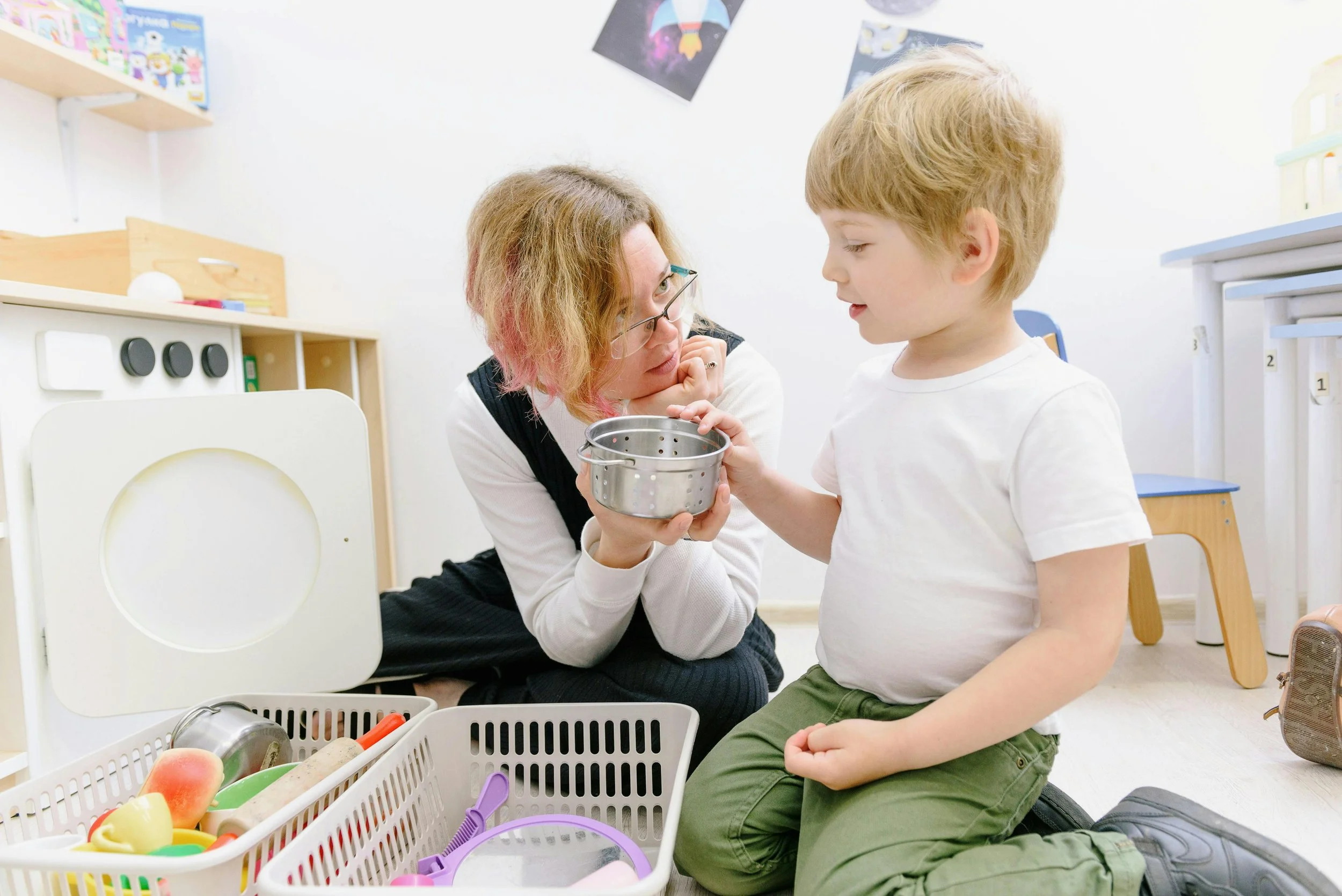
As parents, we all want our children to grow, thrive, and reach their full potential. Communication is a key part of that journey, as it affects everything from social interaction to academic success. However, some children may experience delays or difficulties in speech and language development, which can cause frustration for both them and their parents. Recognizing the early signs of speech or language issues is crucial for getting the help your child may need to thrive.
In this post, we’ll highlight early milestones and offer guidance on when to seek speech therapy for your child.
What is Speech Therapy?
Speech therapy is a skilled professional intervention that focuses on helping people develop and improve their communication skills. It also includes feeding and swallowing. I wrote a blog post that highlights just how awesome SLPs are here. When it comes to working with children, speech therapy includes speech sound production (how your child is making sounds and words), language development (your child’s understanding and use of words), literacy (reading and writing), pragmatics (the social nuances or “use” of language), and so much more. Early intervention is critical because it can significantly improve a child’s communication abilities and overall quality of life.
Early Communication Milestones: When to Seek Help
Every child develops at their own pace, but there are certain milestones and indicators to watch for that may indicate a speech or language issue. I refer parents to the American Speech Language and Hearing Association (ASHA) for a thorough milestone guide.
Here’s a breakdown of important speech and language milestones to watch for, based on age ranges:
0-6 Months
Listening and Responding: Your baby begins to turn their head toward sounds and voices. They may startle at loud noises and show a preference for familiar voices.
Cooing: Babies will make cooing sounds like "ooh" and "ahh" and experiment with different pitches.
Facial Expressions: They will use facial expressions to show emotions, and begin to make eye contact with caregivers.
6-12 Months
Babbling: At around 6 months, babies begin babbling, using repetitive consonant-vowel combinations like "ba-ba" or "da-da."
Responding to Name: They may start responding to their name and other familiar sounds or words.
Imitating Sounds: Babies will begin imitating simple sounds or vocalizations, even mimicking tone or pitch.
Gestures: Around 9 months, babies begin using gestures, such as waving or reaching, to communicate their needs.
12-18 Months
First Words: Around their first birthday, children often say their first words, such as "mama," "dada," or familiar names of family members or pets.
Following Simple Commands: They may begin following simple commands like "come here" or "give me the toy."
Increased Gesture Use: Children will rely more on pointing or other gestures to communicate and show interest in objects or people.
18-24 Months
Vocabulary Growth: By 18 months, many children have a vocabulary of around 50 words and may begin combining two words, like "want cookie" or "big truck."
Naming Objects: They may start naming familiar objects or people in their environment, like “ball” or “dog.”
Understanding Simple Sentences: Children begin understanding simple instructions, such as "Put the block in the box" or "Where is your shoe?"
2-3 Years
Expanding Vocabulary: A child’s vocabulary typically grows to 200-1,000 words by the age of 3.
Simple Sentences: They start combining three or more words to form simple sentences like “I want more juice” or “Daddy go work.”
Pronunciation Improvements: They may still have some difficulty pronouncing certain sounds, but the majority of speech should be understandable.
Asking Questions: Children will start asking simple questions like "What's that?" or "Where's mommy?"
3-4 Years
More Complex Sentences: By age 4, children are able to use four or more words in a sentence, such as “I like to play outside with my friends.”
Speech Clarity: While they may still mispronounce some words, their speech should be understandable to familiar listeners most of the time.
Following Multi-Step Directions: They can follow more complex instructions, like “Pick up the toy and put it on the table.”
Use of Verb Tenses: Your child may start using past, present, and future tenses in sentences (e.g., "I played" or "I will go").
4-5 Years
Complex Sentences: Children begin using longer, more detailed sentences and may start using conjunctions like "because" or "and."
Storytelling: They can tell short stories or explain events that happened, using full sentences and more organized thoughts.
Increased Vocabulary: By age 5, a child’s vocabulary should be around 1,500 words, and they may begin using more descriptive words.
Clear Speech: Their speech is clearer and understandable to strangers, though some mispronunciations may still occur.
5-7 Years
Advanced Sentence Structure: Your child can now form more complex sentences with multiple clauses (e.g., “I went to the park and then I saw my friend”).
Understanding and Using Complex Language: Children begin to understand and use more abstract language, like understanding figurative language (e.g., “It’s raining cats and dogs”).
Storytelling Skills: They can tell detailed stories with a clear beginning, middle, and end.
Pronunciation: Most children’s speech is easily understandable by unfamiliar listeners, with only a few occasional sound errors.
What to do next
It’s important to remember that every child develops at their own pace. However, if there are concerns about speech or language development, early intervention is key. The sooner therapy begins, the sooner your child can gain the tools they need to communicate effectively and with confidence.
If you notice any of the signs above, you can reach out to various people for help. In SD, if your child is under the age of three, you can request an evaluation through the state’s Birth to Three program. You can also contact your local school district or a local private practice to request a screening and they can assist with next steps. Caveat: there are some key differences between private and school-based services, and I plan to write a blog post to explain those. You can also ask your child’s pediatrician for a referral to a speech-language pathologist. The main thing to remember is to trust your gut if you have any concerns. Wait-and-see is not the preferred approach when it comes to early intervention.
Conclusion
Speech and language development is a critical aspect of your child’s growth. Recognizing the early signs of speech delays or disorders can help you get the right support for your child when they need it most. If you’re ever unsure, don’t hesitate to reach out to a professional who can guide you in the right direction. Remember, speech therapy can provide valuable tools and strategies that will help your child succeed, both now and in the future.
If you suspect that your child may benefit from speech therapy, please don’t hesitate to reach out to our practice. We’re here to help every step of the way!